The Goods and Services Tax (GST) Council has recently announced key decisions that affect both consumers and industries across India. From increasing taxes on sin goods to providing relief for vehicle buyers, these updates reflect the government’s push for balancing revenue collection with consumer welfare. Let’s break down the major highlights.
What Are Sin Goods?
Sin goods are products considered harmful to health or society. The government uses higher taxes on these goods to discourage consumption while generating extra revenue for public welfare programs.
Some common examples of sin goods include:
- Pan masala
- Cigarettes and other tobacco products
- Gutka
- Aerated and carbonated drinks
- Energy drinks
- Certain luxury items
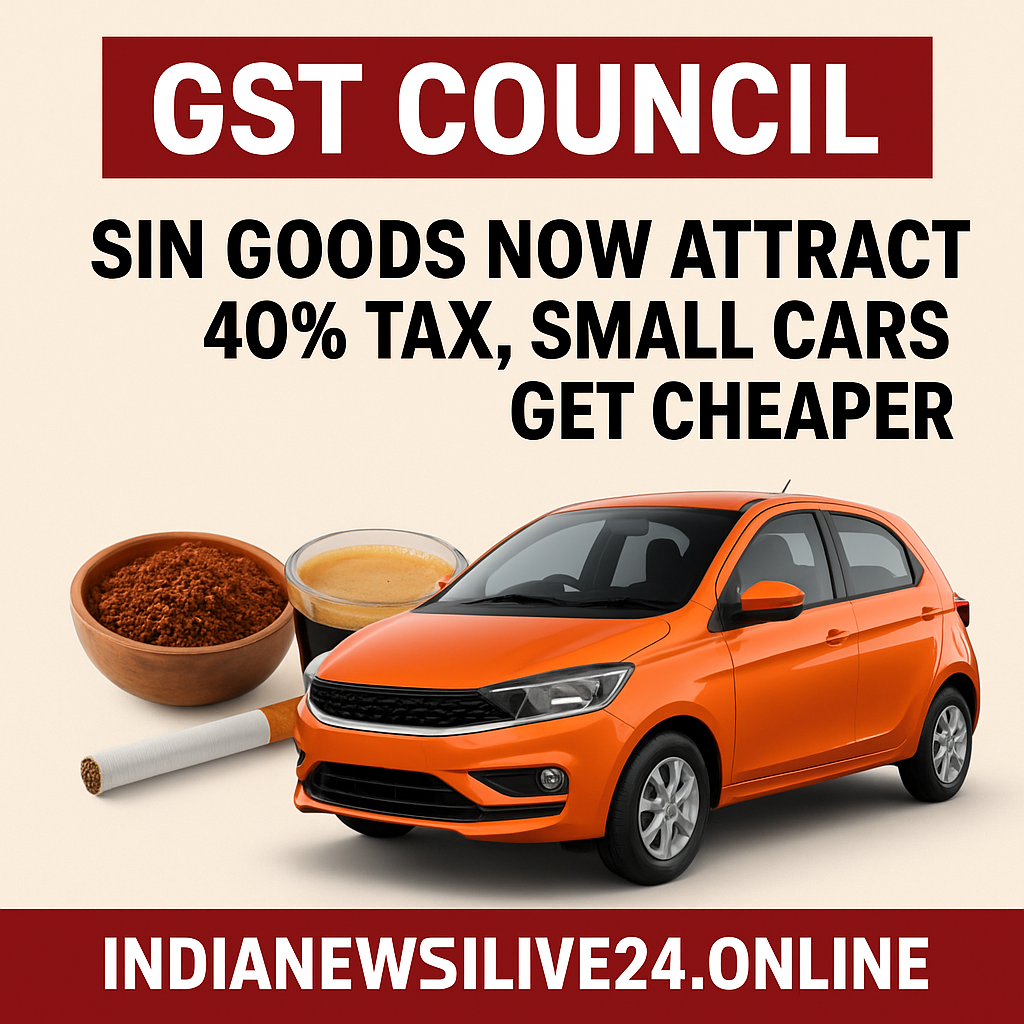
These items fall in the highest GST tax bracket, and the Council has decided to increase their rates even further to 40%.
Why Sin Goods Face Higher GST
The logic behind taxing sin goods heavily is twofold. First, high prices make people think twice before buying harmful products like tobacco or sugary drinks. Second, the extra money collected through taxes can be used by the government to fund healthcare and development projects.
This move also aligns with global practices, as many countries impose higher taxes on goods that can damage public health. By raising GST on such items, India aims to control lifestyle-related health problems and reduce the financial burden on the healthcare system.
Impact on Consumers
For consumers, this means products like cigarettes, gutka, and soft drinks will become more expensive. While many see this as a burden, others believe it can help reduce addiction and promote healthier lifestyles. For example, rising cigarette prices over the years have already discouraged many young people from picking up the habit.
Impact on Industry
Manufacturers of sin goods will face higher tax obligations, which could reduce sales volume. However, the demand for addictive products like tobacco is often less sensitive to price hikes. Still, companies in the aerated drinks sector may feel the pressure, as buyers could shift toward healthier alternatives like fruit juices or traditional beverages.
Relief for Automobile Buyers
While some products are getting costlier, the GST Council has also brought good news for the automobile sector. Small cars, luxury cars, two-wheelers under 350cc, and three-wheelers will now be taxed at a lower 18% GST rate.
This decision is expected to provide a major boost to the auto industry, which has been struggling with high costs and fluctuating demand. Lower GST means reduced prices, making cars and bikes more affordable for buyers.
Impact on the Auto Sector
Industry experts believe this step will revive demand, especially in the small car and two-wheeler categories, which are popular among middle-class families. For luxury car buyers, even a small percentage cut results in significant savings, which could encourage purchases.
This move is also expected to support job creation across the auto supply chain, from manufacturing to dealerships.
Balancing Act of the Council
The Council’s decisions clearly show an effort to balance consumer interests with public health and revenue needs. By taxing harmful products heavily and reducing costs on essential sectors like mobility, the Council is trying to ensure fairness.
Wider Economic Impact
Revenue Generation: Higher tax on sin goods will add more funds to government revenue.
Healthcare Benefits: With increased prices, the demand for harmful products may reduce, lowering health risks in the long run.
Consumer Relief: Reduced tax on vehicles makes commuting more affordable and can also support India’s growing urban and rural mobility needs.
Industry Growth: While the tobacco and soft drink industries may face hurdles, the automobile sector stands to gain significantly.
How Consumers Are Affected in Daily Life
Buying a pack of cigarettes, gutka, or an energy drink will now cost more.
Moviegoers and youngsters who often buy aerated drinks will notice the price rise.
Families planning to purchase a small car or scooter will find them cheaper, thanks to the 18% GST slab.
Three-wheelers, which are a major mode of public transport in many cities, will also become more affordable, indirectly benefiting daily commuters.
Expert Opinions
Economists say the tax hike on sin goods is a positive move to promote better health outcomes. At the same time, the cut in vehicle taxes is being viewed as a stimulus measure for the auto industry. The combination of both steps could help balance inflation and consumer demand across sectors.
Future Outlook
The GST Council may continue to adjust tax rates depending on industry feedback and economic conditions. For now, the message is clear: harmful products will be taxed more, while sectors that impact everyday mobility and economic growth will be supported through relief measures.
Conclusion
The latest GST Council decisions send a strong message about India’s taxation priorities. By making sin goods like tobacco, gutka, and aerated drinks costlier, the government is pushing for healthier choices. On the other hand, reducing GST on vehicles provides immediate relief to families and supports industrial growth.
As these changes roll out, their real impact will be seen in consumer behavior, industry performance, and government revenues. For the common man, the updates mean costlier harmful products but more affordable cars and bikes—shaping a balanced approach toward both health and economic growth.