As September 2025 progresses, fuel prices across India have remained notably stable, offering relief to consumers amid global market uncertainties. Petrol and diesel rates in major cities such as Delhi, Mumbai, Chennai, Bengaluru, and Kolkata have shown minimal changes, despite the persistent volatility in international crude oil prices.
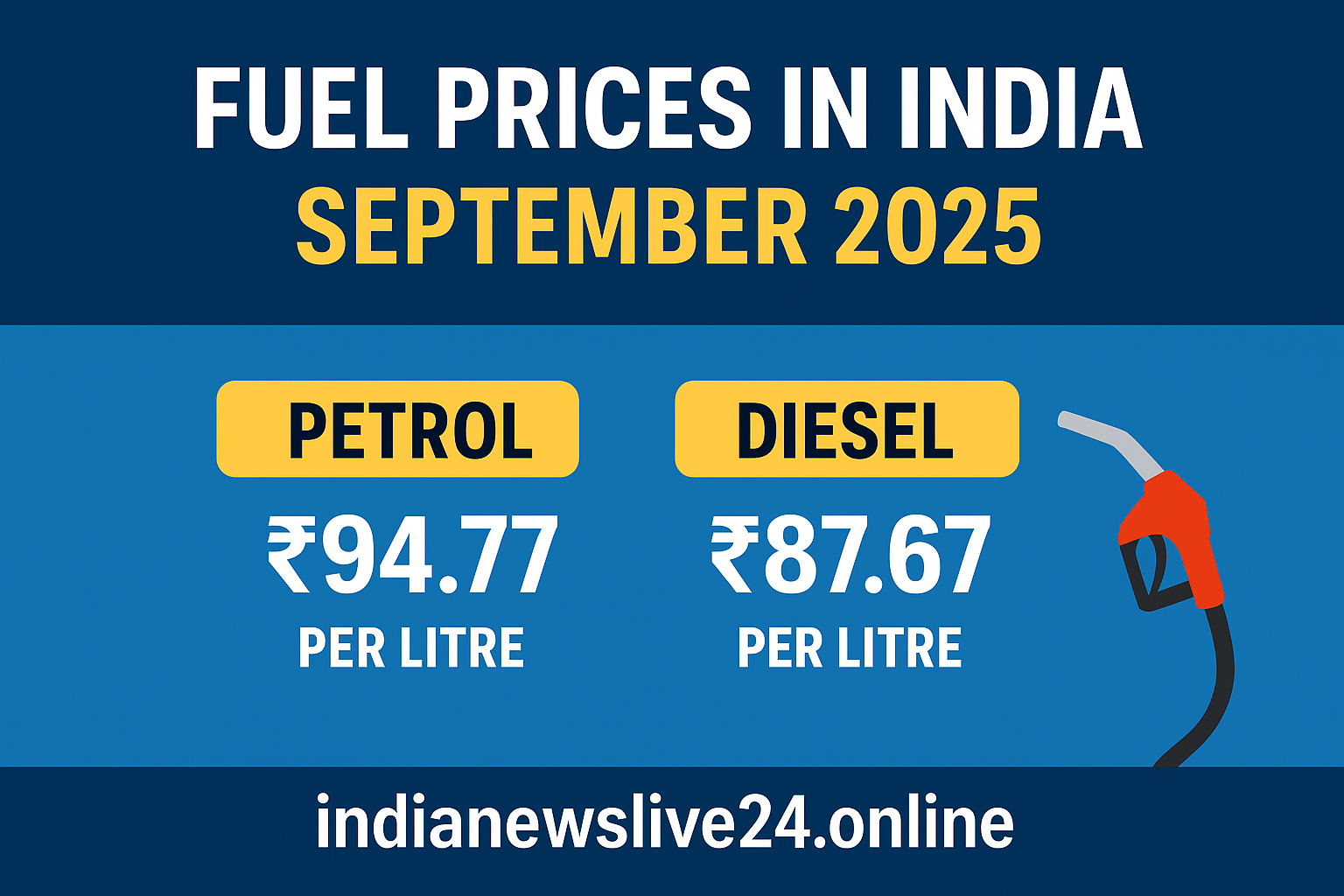
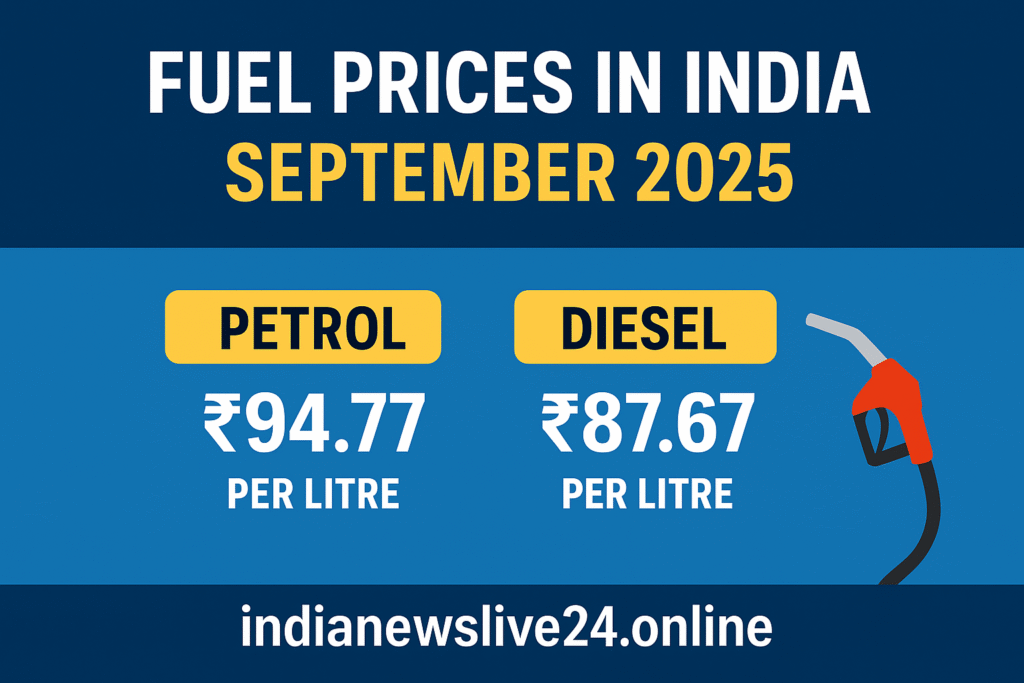
The current retail price of petrol in New Delhi is around ₹94.77 per litre, while Mumbai records ₹103.50 per litre. Chennai and Kolkata report ₹100.80 and ₹105.41 per litre, respectively. Diesel prices in New Delhi hover at ₹87.67 per litre, with Mumbai at ₹90.03 and Chennai around ₹92.39 per litre. These figures reflect a balance between global market pressures and domestic policy decisions.
Internationally, crude oil prices have been swinging due to geopolitical tensions in oil-producing regions, supply-demand imbalances, and varying global energy policies. Despite these global uncertainties, India has managed to maintain relative stability in its fuel prices by tactically managing taxation and excise duties imposed by the government.
A major reason for this stability is the Indian government’s strategic use of taxation policies. The government has often adjusted excise duties and Value-Added Tax (VAT) in various states to soften the impact of rising global crude oil prices. This has allowed consumers to avoid sudden, sharp hikes in fuel costs, which could have severely impacted daily commuters and logistics services.
Historically, fuel taxes contribute a large portion to the final retail price of petrol and diesel. The central government and state governments levy separate taxes, and the overall tax burden often forms more than 50% of the retail price. By adjusting these taxes from time to time, the government can manage the end-user price effectively without being fully exposed to global market fluctuations.
The recent period of stability is a welcome reprieve for Indian households and businesses, especially as the economy is still recovering from the lingering effects of the pandemic and inflation pressures. Stable fuel prices directly contribute to easing transportation costs, which indirectly affects goods and services prices across the board.
For consumers, this period of price steadiness brings predictability in monthly expenses. This is especially beneficial for those who rely heavily on personal vehicles or use diesel-powered transport for business. The lack of sudden price surges offers some breathing space in household budgets and helps businesses plan their logistics costs more efficiently.
However, industry experts caution that this period of calm may not last indefinitely. The global crude oil market remains unpredictable. Several factors could disturb the current balance, such as new geopolitical conflicts in oil-producing regions, unexpected changes in OPEC’s production strategies, or shifts in global energy demand patterns as countries transition toward renewable energy sources.
Another important aspect of this period is the growing public and governmental push for eco-friendly and sustainable solutions. As fuel prices stabilize, there is a rising awareness about reducing dependency on fossil fuels. Electric vehicles (EVs), hybrid models, and public transport are gradually gaining popularity in India, encouraged by government incentives and infrastructure improvements.
Looking forward, industry analysts predict that any future changes in fuel prices will likely be gradual, barring any significant global disruptions. The government is expected to continue balancing the taxation structure to absorb external shocks as much as possible. The objective remains to protect consumers from the full brunt of international market changes while ensuring the petroleum industry’s operational sustainability.
For daily commuters and businesses alike, these developments are crucial. High fuel prices have often been a source of public unrest in India, with protests erupting during sharp price spikes. In contrast, stable fuel rates help maintain social and economic harmony, especially in a populous country where millions of people rely on fuel every day.
Another critical angle is the environmental impact of fossil fuel consumption. As the government focuses on long-term sustainability, steps are being taken to promote cleaner energy alternatives. The recent policies incentivizing electric vehicles, along with efforts to expand charging infrastructure, are part of a larger vision to gradually reduce the dependence on petrol and diesel in the coming years.
In conclusion, the fuel prices in India as of September 2025 reflect a well-managed equilibrium amid global uncertainties. With petrol prices hovering around ₹95 to ₹105 per litre and diesel around ₹88 to ₹92 per litre across major cities, the current scenario provides some relief to consumers and businesses alike. The government’s judicious taxation policies have played a key role in maintaining this balance.
As the festive season approaches, the stable fuel pricing is expected to further boost consumer sentiment and spending, contributing to economic activity. Nevertheless, it remains important for consumers to stay informed about global market trends and government policy changes, as these can influence future fuel pricing.
In the long run, India’s energy strategy is likely to continue focusing on sustainability, green energy adoption, and gradual reduction of fossil fuel dependency, alongside managing retail fuel prices for the general public.